Secure crypto storage long term what is binance
Secure Crypto Storage Long Term: What Is Binance and How It Fits a Long-Term Strategy (2026 Review)
If you’ve been in crypto for any amount of time, you’ve probably heard the same advice repeated in different forms: “Don’t leave coins on an exchange forever.” But that doesn’t mean exchanges are useless. It means the right storage approach depends on what you’re trying to accomplish—especially when you’re thinking about secure crypto storage long term.
In this review-style guide, we’ll look at what long-term security actually means, the practical risks people run into, and where “what is Binance” fits into a thoughtful storage plan. We’ll also cover real-world use cases, plus clear pros and cons, so you can decide how to structure your own strategy.
What “Secure Crypto Storage Long Term” Really Means
Long-term storage isn’t just about picking a wallet and calling it a day. Security is layered. A robust approach usually includes:
1) Key ownership and control
You want to control the private keys—either directly (self-custody) or through a system that you understand well enough to trust. “Custody” determines whether you can sign transactions yourself.
2) Redundancy and recovery
Your plan should survive common failure modes: lost device, forgotten seed phrase, damaged backups, or partial data corruption. If you can’t recover access, “secure” doesn’t matter.
3) Threat modeling
Consider what you’re protecting against:
- Exchange insolvency or withdrawal restrictions
- Account takeover (phishing, SIM swaps, credential stuffing)
- Malware targeting hot wallets
- Physical theft or loss of seed phrase
- Operational mistakes (sending to the wrong address, using the wrong network)
4) Practical usability
A plan that’s perfect on paper but impossible to execute under stress usually fails. Long-term storage should be maintainable—even for a non-engineer.
Where “What Is Binance” Comes In
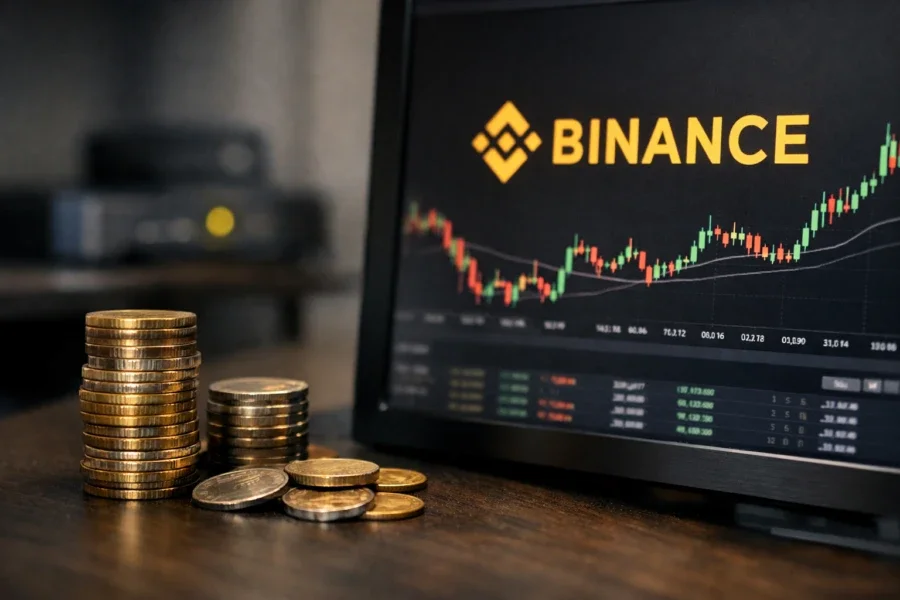
So, what is Binance? Binance is one of the world’s largest cryptocurrency exchanges, offering spot trading, derivatives, earn products, and a range of services for individuals and institutions. In the context of long-term storage, Binance is best understood as a trading and account services platform, not a “set-and-forget vault.”
That distinction matters because exchanges introduce different risk characteristics:
- You rely on Binance’s operational security and solvency.
- You manage account security (2FA, withdrawals whitelisting, anti-phishing habits).
- You still face risks related to account compromise or policy restrictions.
If your goal is “secure crypto storage long term,” your strategy should define how long you keep funds on Binance, how you secure your account, and when you move assets to a more self-custodied setup.
A Practical Long-Term Storage Framework (Exchange + Self-Custody)
Here’s a common (and workable) approach used by many serious crypto holders:
Layer 1: Exchange for liquidity, not permanence
Keep only what you need for:
- Active trading or periodic rebalancing
- Short-term earning opportunities (if you choose them)
- Fiat on/off ramp needs
Even if you prefer Binance as your on-ramp, don’t treat it like cold storage. Think of it as a “working wallet,” not a vault.
Layer 2: Cold storage for long-term holdings
For most long-term investors, the core holdings move to:
- Hardware wallets (offline signing)
- Secure backups of seed phrases
- Possibly a multi-sig setup for higher-value treasuries
Layer 3: A disciplined withdrawal and backup routine
Long-term security improves massively when you build habits:
- Withdraw to self-custody on a schedule (e.g., weekly, monthly, or when balances exceed a threshold)
- Verify addresses and networks before transfer
- Store seed phrases securely and redundantly
- Test recovery procedures (carefully and responsibly)
Real-World Use Cases
To make this less theoretical, here are realistic scenarios where the “Binance + secure long-term storage” model is commonly used.
Use Case 1: DCA investor who trades occasionally
You might DCA BTC and ETH through an exchange, then move most holdings off-platform:
- Week 1–2: Buy on Binance, keep a small portion for possible trading
- Month-end: Withdraw the bulk to a hardware wallet
- Quarterly: Rebalance based on your plan
This approach reduces exposure time on the exchange while keeping your routine simple.
Use Case 2: Business owner paying suppliers (operational stability)
A small operational balance may need to stay accessible. You could:
- Keep operational funds on Binance (or another exchange) for quick swaps
- Maintain larger “treasury” holdings on cold storage
- Move funds when balances cross a predefined threshold
Use Case 3: Long-term holder responding to market volatility
In volatile markets, people often panic and make rushed decisions. A disciplined plan can help:
- Keep core assets cold
- Maintain only a limited “risk budget” hot
- Use Binance for planned actions, not emotional ones
Binance: Pros and Cons for Long-Term Storage Planning
Below is a balanced review of Binance specifically in the context of secure crypto storage long term.
Pros
- Strong liquidity and market access: Binance is widely used for trading pairs, conversions, and on/off ramp workflows. This makes it practical for recurring buys and periodic rebalancing.
- User-friendly account tools: Features like 2FA options and account protections can help reduce account risk when configured correctly.
- Ecosystem depth: If you want to interact with various crypto services (trading, conversions, and certain earning products), Binance is one of the most capable platforms.
- Operational convenience: For many users, the biggest advantage is straightforward execution—buy, exchange, withdraw.
Cons
- Not self-custody: Keeping assets on Binance means you don’t control keys. That’s the core tradeoff versus hardware wallet storage.
- Counterparty risk: Exchange risk isn’t theoretical—history has shown that platforms can fail or face restrictions. Even strong exchanges can face unexpected stress.
- Account takeover impact: If your account is compromised, attackers may attempt withdrawals or trading before you can react.
- Withdrawal and policy dependencies: In extreme market conditions, users may face slower withdrawals or temporary restrictions (even if the platform is fundamentally healthy).
Bottom line: Binance can be part of a secure long-term plan, but the “long-term” portion generally belongs in self-custody.
Secure Account Practices If You Use Binance (Essential)
If you keep any funds on Binance—even temporarily—account security is non-negotiable. Consider:
- Enable strong 2FA (prefer authenticator apps over SMS)
- Use unique, high-entropy passwords and a password manager
- Beware of phishing: never click links from unsolicited messages
- Verify withdrawal settings (some platforms offer whitelisting—use it if available)
- Keep your device clean: avoid installing untrusted software; use reputable antivirus/malware protection
- Check network and address carefully during withdrawals
These steps don’t eliminate all risk, but they drastically reduce the most common failure points.
How to Choose a Long-Term Storage Method
If the main goal is secure crypto storage long term, your choice usually comes down to your comfort level:
Hardware wallets (recommended for most long-term holders)
Best for: individuals holding BTC/ETH and other major assets for years.
Why: they keep private keys offline and reduce exposure to online compromises.
Multi-signature setups (for advanced users)
Best for: higher-value portfolios, families, or organizations.
Why: require multiple approvals to move funds, reducing “single point of failure.”
Paper or offline methods (use with caution)
Best for: minimal amounts or specific use cases.
Why: mistakes happen easily—damage, loss, mis-copies, and formatting errors can permanently lock funds.
A Simple Long-Term Plan Example (Copy/Paste Style)
Here’s a practical setup you can adapt:
- Buy and convert on Binance as needed (only keep a small working balance).
- When balances cross your threshold (e.g., more than $1,000–$5,000 equivalent), withdraw to your hardware wallet.
- Store seed phrase backups offline using redundancy (e.g., two or three secure locations).
- Periodically review your process:
- Are you using the right networks?
- Do your backups remain accessible?
- Are you still following safe device practices?
You’ll notice the theme: reduce time on exchanges; increase time in your control.
Conclusion: Is Binance “Secure” for Long-Term Storage?
So, what’s the final verdict?
Binance is a powerful platform for trading and day-to-day crypto operations, and it can be useful in a long-term strategy—but it should rarely be your final resting place for major holdings. For secure crypto storage long term, the safest approach is usually:
- Use Binance for convenience and liquidity
- Transfer long-term holdings to self-custody (typically hardware wallets)
- Protect your Binance account rigorously if you keep any funds there
If you’re building for years—not weeks—your biggest win is not choosing the “perfect” service. It’s building a system that matches your risk tolerance, recovery plan, and operational habits.
Quick Pros & Cons Summary
Pros
- Strong trading and access features
- Convenient on-ramp/off-ramp and market liquidity
- Useful tools for
🚀 Recommended Platform
Get up to 20% trading fee discount when signing up.